A is for Agitation: foods that can stir the gut up
By Mira Sefton · 16 June 2026 · 3 min read
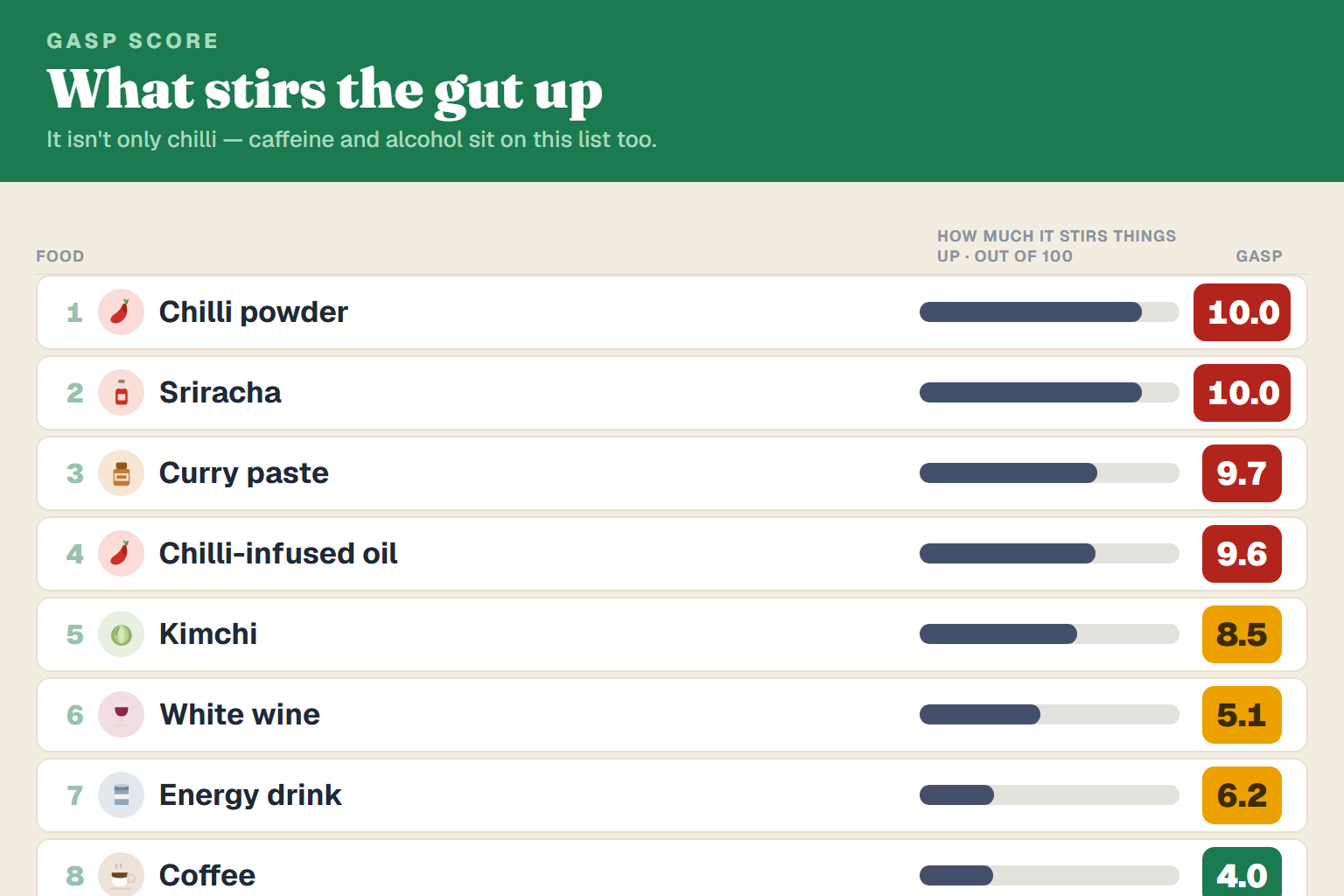
You've eaten something that didn't ferment slowly and quietly. Instead it hit fast — a cramp, a rush to the loo, output that turned to liquid within the hour. That quick, stirred-up feeling is what the A in GASP is trying to flag.
Agitation is different from gas. Gas comes from bugs fermenting carbs over a few hours. Agitation is more direct: the food itself can irritate the gut lining or speed up how fast things move through. The carb content might be fine. It's the other stuff that revs your gut.
What counts as agitation
A handful of things tend to do this. None of them are off-limits — they just ask more of a sensitive gut.
- Chilli (capsaicin). This is the heat compound in chilli. Your gut has receptors that read it as a burn, which can speed up movement and sometimes sting on the way out. The evidence here is fairly strong — capsaicin genuinely affects gut motility.
- Acidity. Citrus, tomato, and vinegary or pickled things sit at the sharp end. For some guts that acid is a non-event. For others it nips.
- Caffeine. Coffee, strong tea and energy drinks can nudge the gut into action. That's partly why a morning coffee gets things going. Useful if you're sluggish, less useful if you're already loose.
- Alcohol. It can loosen output and irritate the lining, and it dehydrates you, which matters more with a J-pouch or ostomy.
- Very fatty or fried food. A big greasy meal can trigger a stronger gut reflex and quicker, looser output. Fish and chips is the classic culprit.
The dose is the whole story
This is the part people miss. Agitation is almost always about how much, not whether.
A dash of chilli flakes is a different thing from a vindaloo. One flat white might be your best friend; three strong long blacks before noon, less so. A squeeze of lemon in water rarely bothers anyone — a whole grapefruit on an empty stomach might.
So our score is a modelled estimate of how agitating a food tends to be at a normal serving. It can't know your gut, your day, or how much you piled on. Your own gut gets the final say.
Gentler ways in
If one of these foods is hard right now, you've usually got options short of going without.
| Instead of | You could try |
|---|---|
| A hot curry | A mild korma, or the same dish with less chilli |
| Strong coffee | Decaf, or a weaker brew, or swapping the second cup for water |
| A big plate of chips | A smaller serve, or oven-baked rather than deep-fried |
| Raw onion and chilli salsa | A milder cooked tomato sauce, or skip the fresh chilli |
| A pickle-heavy ploughman's | The cheese and bread, easy on the vinegary bits |
My favourite trick: when you're cooking for a table, keep the chilli on the side. Let everyone else add heat to their own plate. You get the meal without the gamble.
How to test your own line
Agitation is so personal that the only real answer comes from you. The honest way to find it is to change one thing at a time.
Pick a quiet day. Have your coffee, or a little chilli, or that glass of wine — but only one of them, and a modest amount. Notice what your gut does over the next few hours. Then you actually know something, instead of blaming the whole meal.
A gut that's flared or freshly healing is touchier than a settled one. The food that nipped last month might be completely fine in three months' time. None of this is fixed.
If you want to see how foods stack up on agitation alongside gas and the rest, browse the food scores and read each food's notes. The number's a starting point — your gut writes the ending.